Tuckpointing in McAllen TX - crisp, tight mortar joints and clean brick edges
Mortar crumbling out of your brick joints? We cut out the worn mortar and refill each joint so your wall looks sharp again.
- Service
- Tuckpointing
- Call
- (956) 331-0202
How do you know your mortar joints are wearing out?
Mortar turning to sand
You run a finger along a joint and it comes away gritty, or you find little piles of sand on the sills and along the ground. That usually means the mortar has stopped holding, and the longer it goes, the more water gets in behind the brick and loosens it.
Joints sunk behind the brick
The mortar sits back from the brick faces, so every joint throws a shadow and leaves a small ledge. Rain sits on those ledges and works its way deeper, so waiting means more to cut out later and a better chance of loose brick.
Cracks in joints or brick
Thin cracks or pinholes show up in the mortar, or a crack steps through the joints and splits a brick or two on the way. Plain mortar wear can cause the small ones, but a crack through brick is worth a look soon, because the wall may be moving and that fix only grows with time.
What goes into tuckpointing a brick house in McAllen?
Tuckpointing in McAllen, TX is how we fix a brick wall whose mortar has worn out, by cutting the old mortar out of the joints and packing in fresh mortar so the wall is tight and clean again, finished in the joint style you pick.
Most calls I get start the same way, with a homeowner who's noticed sand on a windowsill or a joint they can scrape out with a key. The price moves with how much wall needs work, how deep the old mortar has worn, how high we have to reach and which finish you want. The schedule turns on the weather the new mortar needs to cure and on any permit the job calls for, and your estimate puts your own number and plan on all of it.
Details to note before an estimate
- Which walls or sides of the house
- Rough height and length of the wall
- Where mortar is crumbling or missing
- Any cracked, loose or flaking bricks
- The joint look you want
- Whether your building is a historic property
How we do tuckpointing on your brick
Tuckpointing and repointing get mixed up a lot, so before anything else I spell out in your estimate exactly which finish you're getting. On the job, we clear the old joints with care around the brick edges so the faces stay crisp instead of chipped, then pack fresh mortar into each joint, shape it, and on a tuckpointing job run the thin putty line down the middle. My old boss would make us tear out a whole course over one bad joint, and I still hold my crew to that, even on the back wall nobody looks at. We brush the brick clean and haul off the old mortar before we leave.
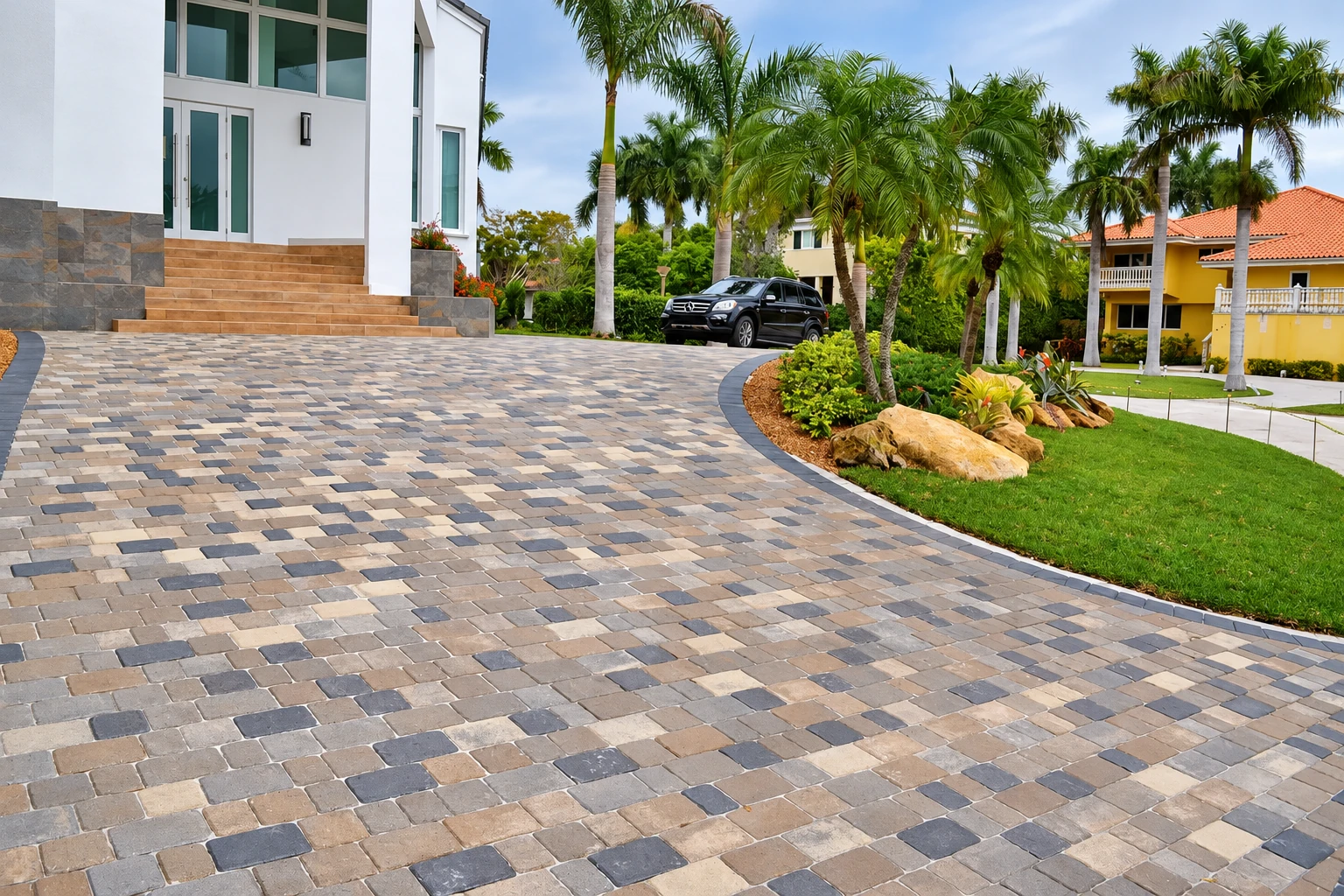
Sometimes the joints aren't the whole story. If some bricks are cracked, loose or flaking, we take care of them with brick repair before we point, so the new joints sit against solid brick. And if you're freshening up the front of the house, our crew also lays driveway pavers that look right next to clean brickwork.
Other brick work that often goes with it
Brick repair
When a few bricks are cracked, flaking or loose, swapping them out before the joints are redone keeps the wall solid and even.
Driveway pavers
If the front of your house is getting fresh brickwork, new pavers can bring a tired driveway up to match the walls behind it.
What happens after you call us about tuckpointing?
Call or send a request
Call (956) 331-0202 or fill out the form on this page, and we'll set a time for me to come by. We're based in McAllen and work in the cities around it across the Valley.
I look at your wall
I come out myself, check the joints up close, ask a lot of questions and talk through what I see. Your estimate lists which walls we'll do, the finish and the price, so you know the cost before anything starts.
My crew does the work
If the job needs a permit, we've sorted it out with the city before we start. When the joints are done and the site is clean, I walk the finished wall with you.
Questions before you book tuckpointing
How much does tuckpointing cost in McAllen?
Tuckpointing across the US usually costs about $5 to $25 per square foot, and that's a national figure for the work, not our price. Where your wall lands depends on how much of it needs work, how deep the joints are worn, how high we have to reach and which finish you pick, and emergency work in winter or during extreme heat waves will likely cost more. I'll put your own number in the estimate, and the work is backed by our satisfaction guarantee.
How do I know if my mortar needs tuckpointing?
Your joints need work when the mortar has worn back more than ¼ inch, is crumbling, shows hairline cracks or voids, or the bricks are cracking along with the joints. Any one of those is reason to have someone who knows masonry look at the wall before it gets worse. If a crack is the main worry, watching it over a while tells you whether it's still moving, because an active crack should be sealed with a flexible sealant while one that's stopped can be pointed.
What is the difference between tuckpointing and repointing?
Both replace old mortar, but tuckpointing fills the joints with mortar close to your brick's color and adds a thin line of contrasting putty for crisp lines, while repointing uses fresh mortar that matches your old mortar color. Repointing usually suits a wall where you want the repair to blend into the old work, and tuckpointing suits a house where you want sharp, defined joints. When you compare bids, ask each one which finish it covers so you're pricing the same job.
Do I need a permit for tuckpointing in McAllen, TX?
It may, because the city's Building Permits and Inspections Department generally requires a permit when you erect, construct, alter, repair or improve a building, so it's worth asking before work starts. If your property falls under the city's historic preservation rules, you need a certificate of appropriateness before you can get a building permit for alterations, which means the Historic Preservation Council approves the work first and the permit application follows. When a permit is needed, we handle the paperwork with the city and set up the inspections, and we're licensed and fully insured.
What is the best way to tuckpoint old brick without damaging it?
Use new mortar that's weaker than the brick, because mortar harder than the brick makes the brick faces spall and flake away. Ask any contractor how their mortar compares with your brick, and whether they'll set a small sample in a hidden spot first so you can see how it matches the old joints. It's also fair to ask how they'll cut out the old mortar, since power tools are faster than hand tools but can damage the brick around the joints.
How long does tuckpointing last on a brick house?
Mortar usually lasts about 25 to 50 years, while the brick itself lasts 100 years or more, so a brick house will likely need its joints redone during its life. That makes joint work part of keeping the house up over the long run, not a sign something went wrong. When you plan it, spring or fall is the usual pick, because mortar cures best when daytime temperatures stay between 40 and 90 degrees for at least 24 to 72 hours.
Get a tuckpointing estimate for your brick walls
We reply within one business day to set up a visit. I come out myself to look at your joints, and the estimate is free, done on site and comes with no obligation.
Explore our services and areas
Services
Send us photos of your worn joints
A few photos and a note on whether your building falls under the city's historic preservation rules help me plan the right visit before I get there.